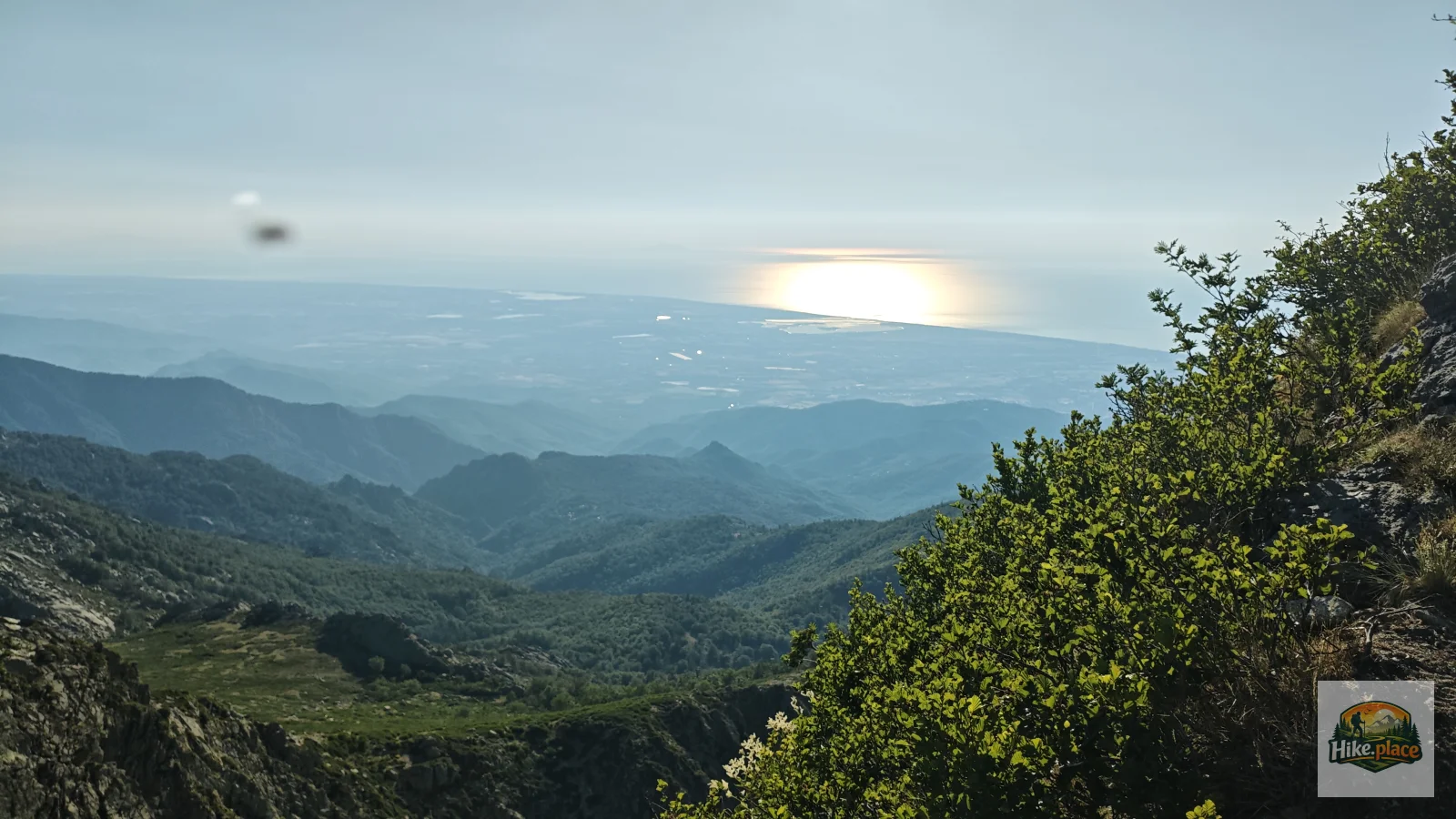
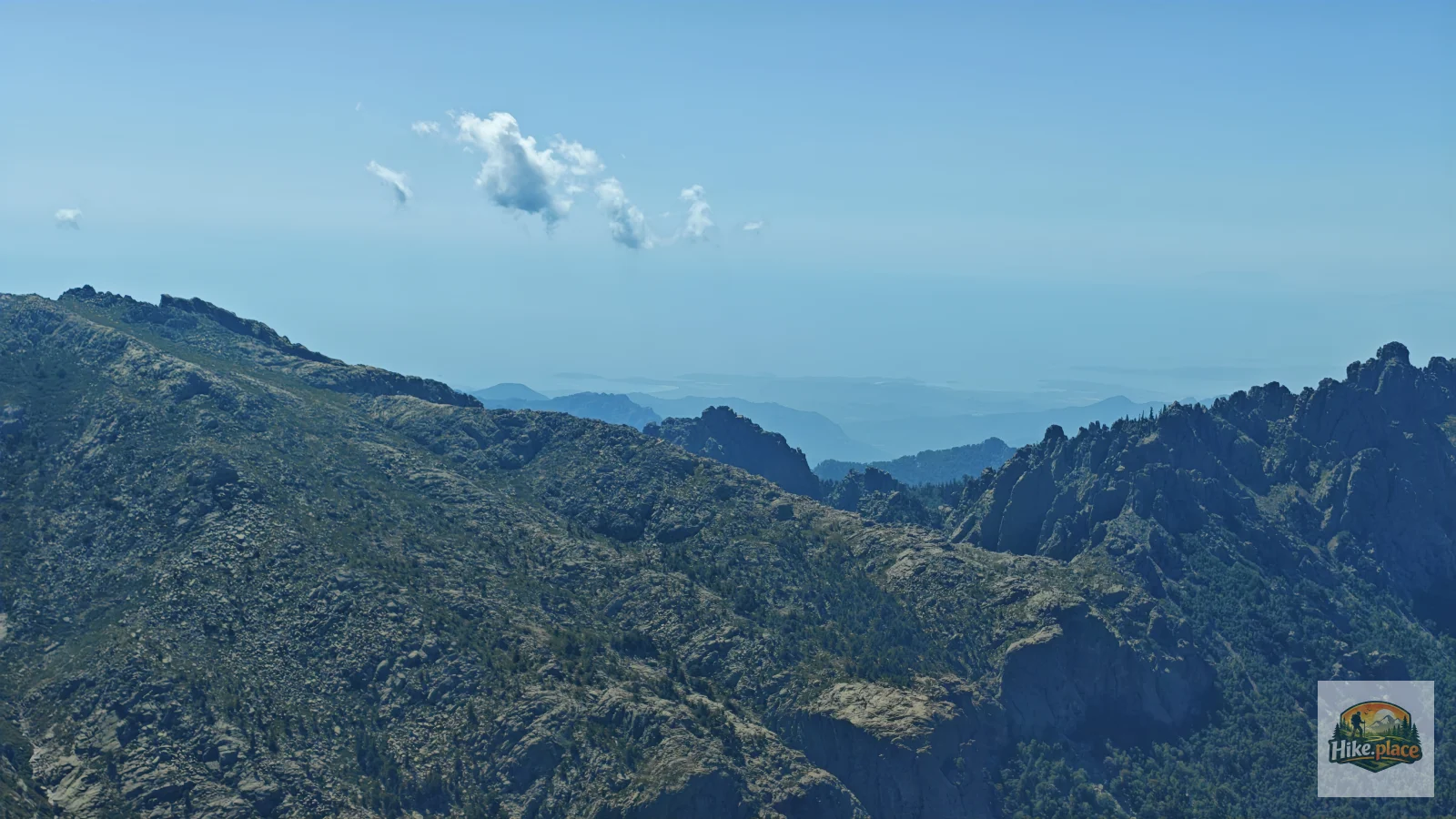
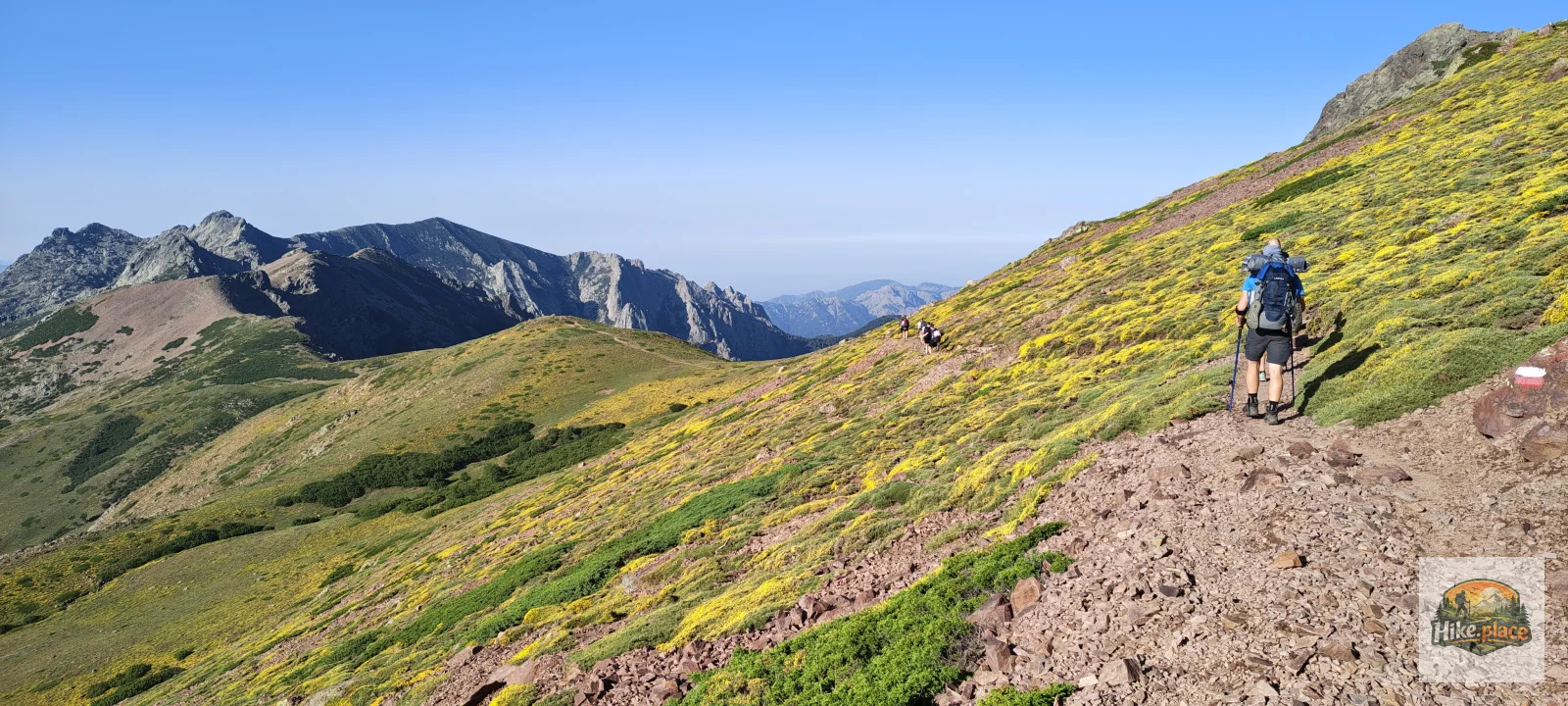
Corsicans call the GR20 "Fra li Monti" — between the mountains. The trail runs along the granite spine of the island from Calenzana in the north to Conca in the south: roughly 180 kilometres, 16 official stages, more than 12,000 metres of climbing, and a reputation as the toughest waymarked trek in Europe. We had 11 days for it. Ours, though, didn't start with granite. It started with a ten-minute taxi ride and the sight of two buses leaving right in front of our noses. Then came a six-hour wait for the train in unbelievable heat. We rotated between sitting, lying and standing, with regular pilgrimages to a little shop run by a friendly Romanian lady, restocking water and the odd beer "for hydration purposes". By evening we finally set off from Calenzana, charged up the first 200 vertical metres, found a gorgeous spot to sleep and collapsed into it, completely wrecked. All of this before the trek had even properly begun.

Day 2: A Double Stage to Say Hello
Passing hikers woke us at dawn. The night had been so hot we'd slept on top of our sleeping bags in just the liners. Today's plan was ambitious: combine the first two stages into one. First the climb to the Ortu di u Piobbu hut, then on to Carrozzu. We counted lizards along the way and prayed the sun would stay behind the ridge as long as possible — the very first stage climbs more than 1,200 metres out of Calenzana. Technically it was easy. Physically, proper hard work. Halfway up we found a grassy shelf and gave ourselves half an hour of nothing but views.
We rolled into the first camp after about four hours. Beer, cola, food — and two hours of hiding from the worst of the midday furnace. When the sun finally eased off, we set out on part two. This one runs through purely rocky terrain over a string of small cols, and with tired legs it made us earn it. Six more hours of chains and careful footwork brought us to Carrozzu, where we ate, finally showered, and toasted the day with a glass of good wine.
Day 3: Bocca a Muvrella and the First Czechs
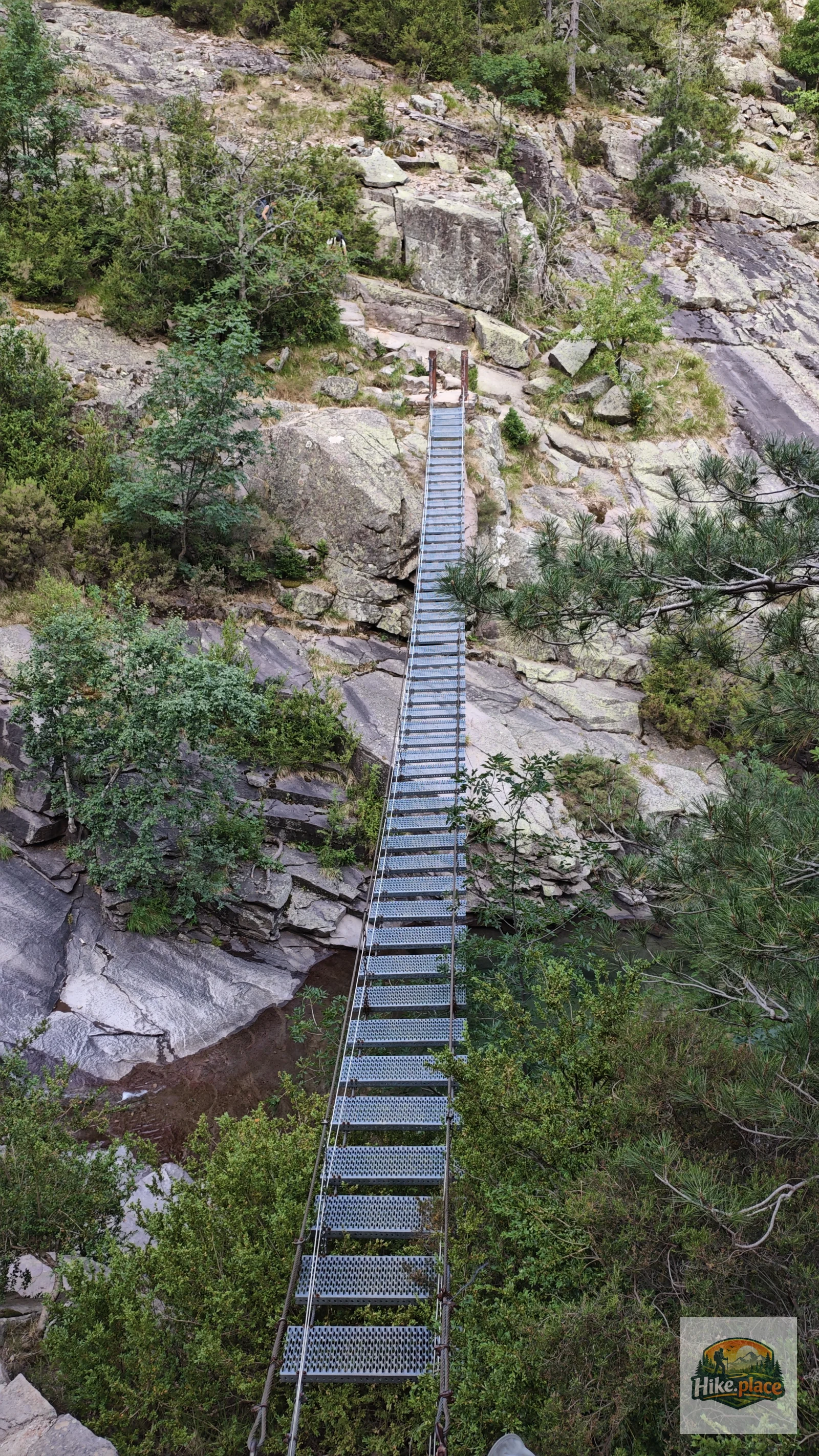
The night was finally cool — towards morning I pulled the sleeping bag over me for the first time. After yesterday's double effort we allowed ourselves a lie-in; a single stage would do today. And it opens in style: right behind the hut you cross the famous Spasimata footbridge, a Nepalese-style suspension bridge over the gorge of the same name and one of the icons of the northern GR20. Then the trail climbs steeply, with beautifully cold pools glinting far below your feet. In the last of them, just under the mountain eye of Lac de la Muvrella, one of us took a dip beneath leftover winter snow. The rest of us cooled off just by watching.
We crossed the Bocca a Muvrella pass at 1,980 metres and dropped into the Asco valley. Haut Asco used to be Corsica's only ski resort; these days it mostly serves trekkers — though its refuge keeper didn't exactly shower us with warmth. We sat out a thunderstorm there and moved on. Along the way I met the first Czechs of the trip and we swapped a few words from home.
Day 4: Monte Cinto and Hot Dogs by Basket
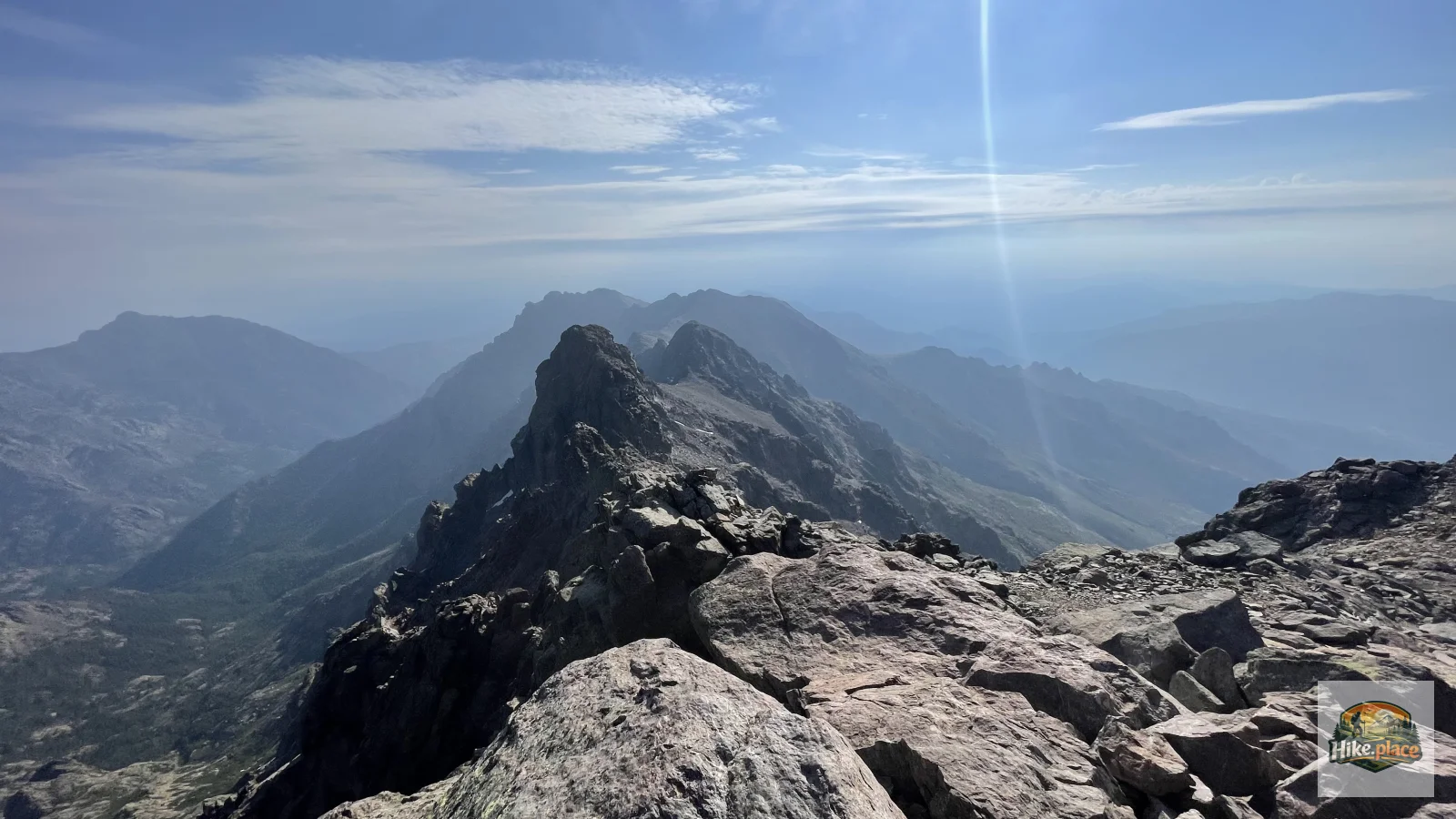
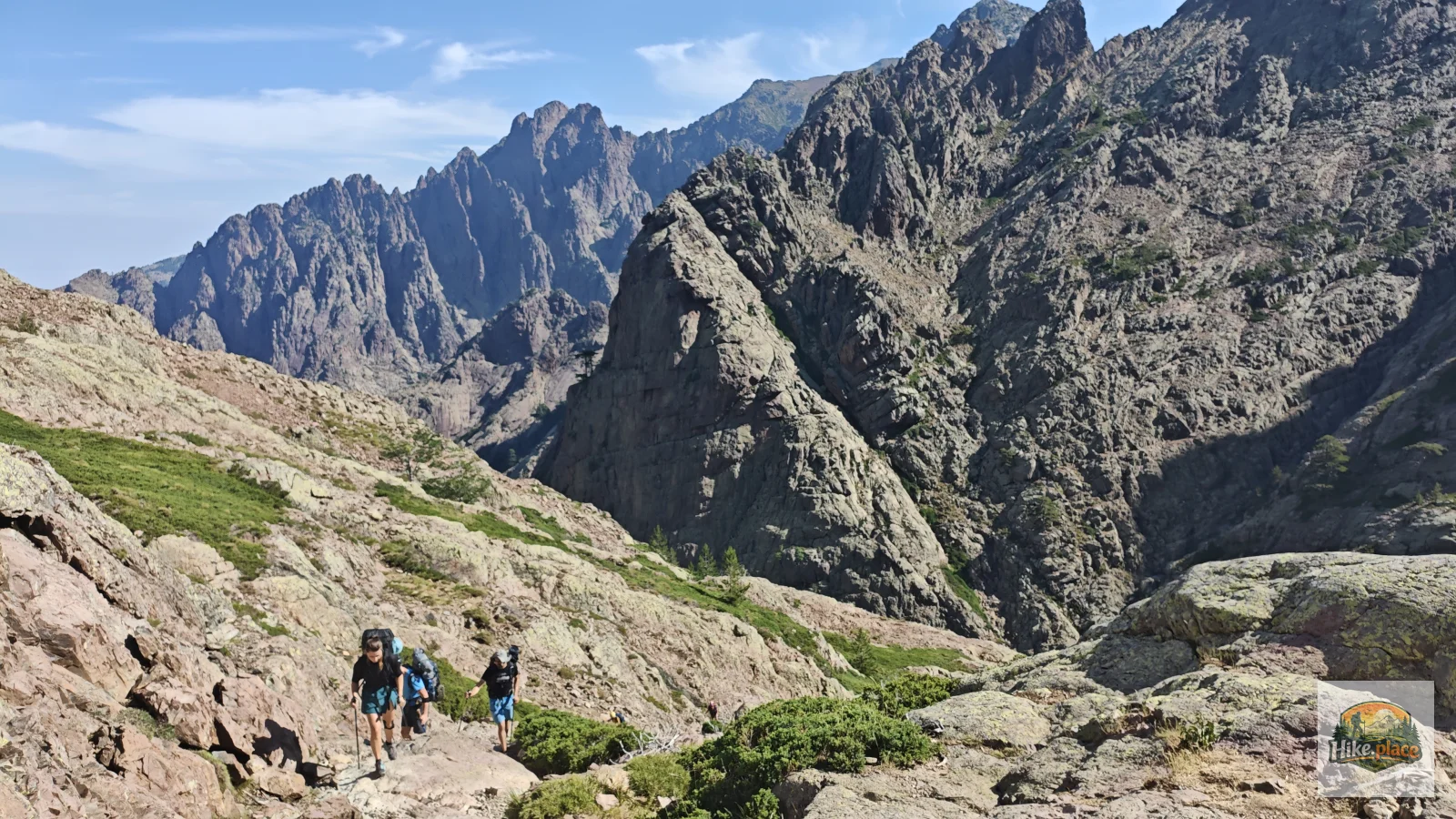
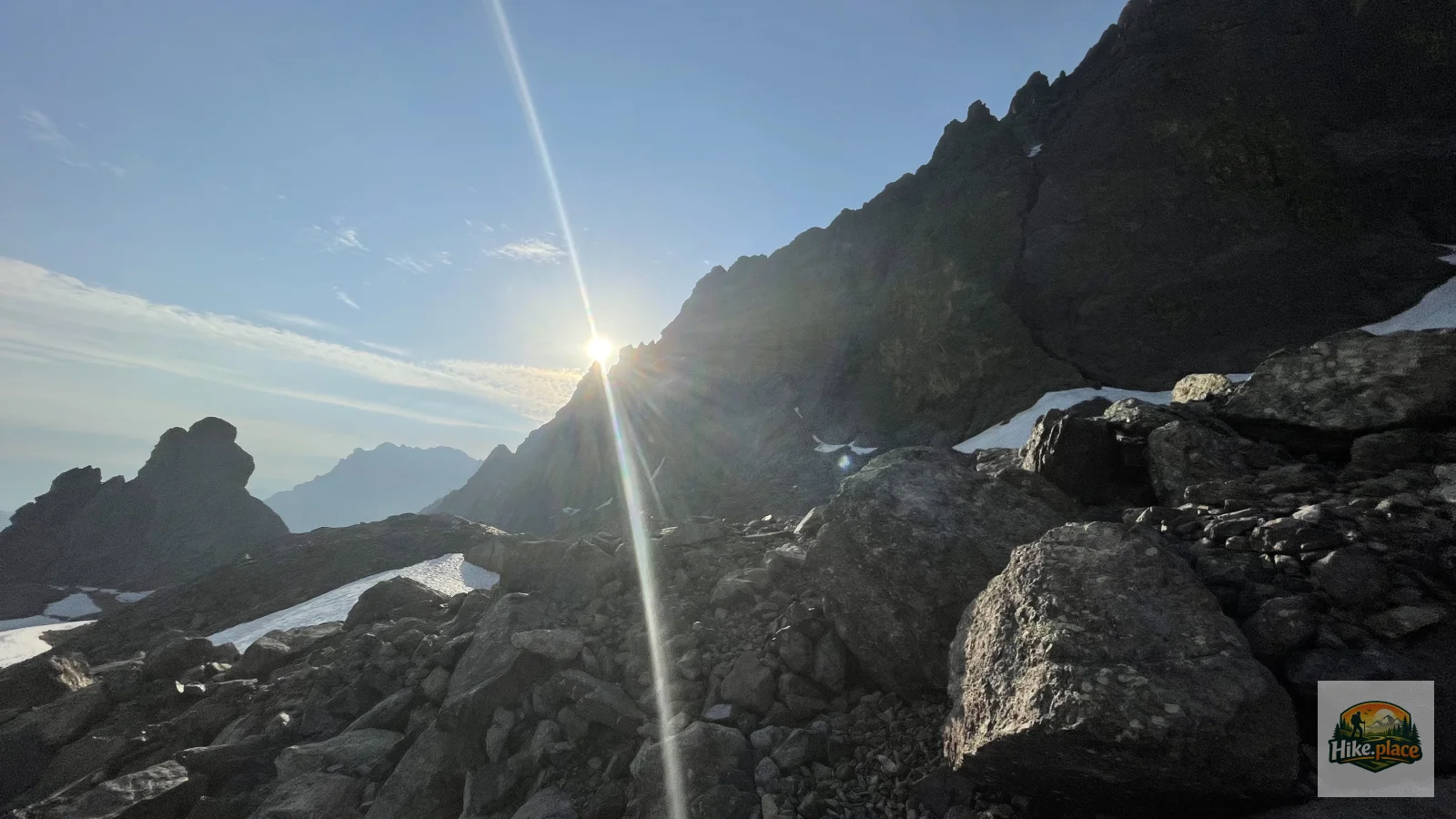
The longest and hardest stage of the GR20 — and the one with a story. The route used to run through the legendary Cirque de la Solitude, but after a tragic rockfall killed seven hikers in June 2015, the cirque was closed. Since 2016 the official trail has gone higher, over the Pointe des Éboulis at 2,607 metres, the highest point of the entire GR20. Snow often lingers here into early July — and we walked straight into it. With storms forecast for the afternoon we started early, hauling up granite slabs secured with chains. Four hours of hard graft and several snowfields later — half-joking about crampons, in July, on a Mediterranean island, though guidebooks here genuinely mention them — we stood in the col. And there came the big decision: the side trip to Monte Cinto, 2,706 metres, the roof of Corsica. An hour and a half there and back. Part of the group went for it — and black storm clouds chased them the entire way down.
We reached the Tighjettu hut just ahead of the storm and stuffed ourselves with the famous 5€ hot dogs. They were lowered to us in a basket from the upper floor — room service, five-star-hotel style. We waited out the next downpour a little lower at the Ballone bergerie, where everyone was lovely and we taught a young lady the Czech word for cutlery: "příbor".
After a long debate we pushed on despite the light rain. After days of scrambling, finally a gentle forest path — followed, of course, by one more steep climb, though this time the drizzle cooled us pleasantly. Beyond the pass it was only a short hop to Ciottulu di i Mori, at 1,991 metres the highest hut of the whole trek, tucked directly beneath Paglia Orba, the peak they call the queen of the Corsican mountains. The hut boasts thoroughly modern toilets. Sadly the ventilation was broken, and the smell inside was so heroic nobody dared go in. In exchange, our first hot shower of the trek. Balance restored.
Day 5: Donkeys, Goats, Wild Horses and Bouncing Ground
The morning began with a beautiful descent along the cascades of the young Golo — Corsica's longest river rises right here beneath Paglia Orba — among massive Laricio pines, the endemic giants the island is famous for. At the first hut we treated ourselves to coffee and cake while watching, with mounting horror, the French army practising belaying and climbing technique in the background. We kept waiting for them to notice they were doing it wrong, and debated offering a few friendly tips. Little did we know we'd keep running into them for days.
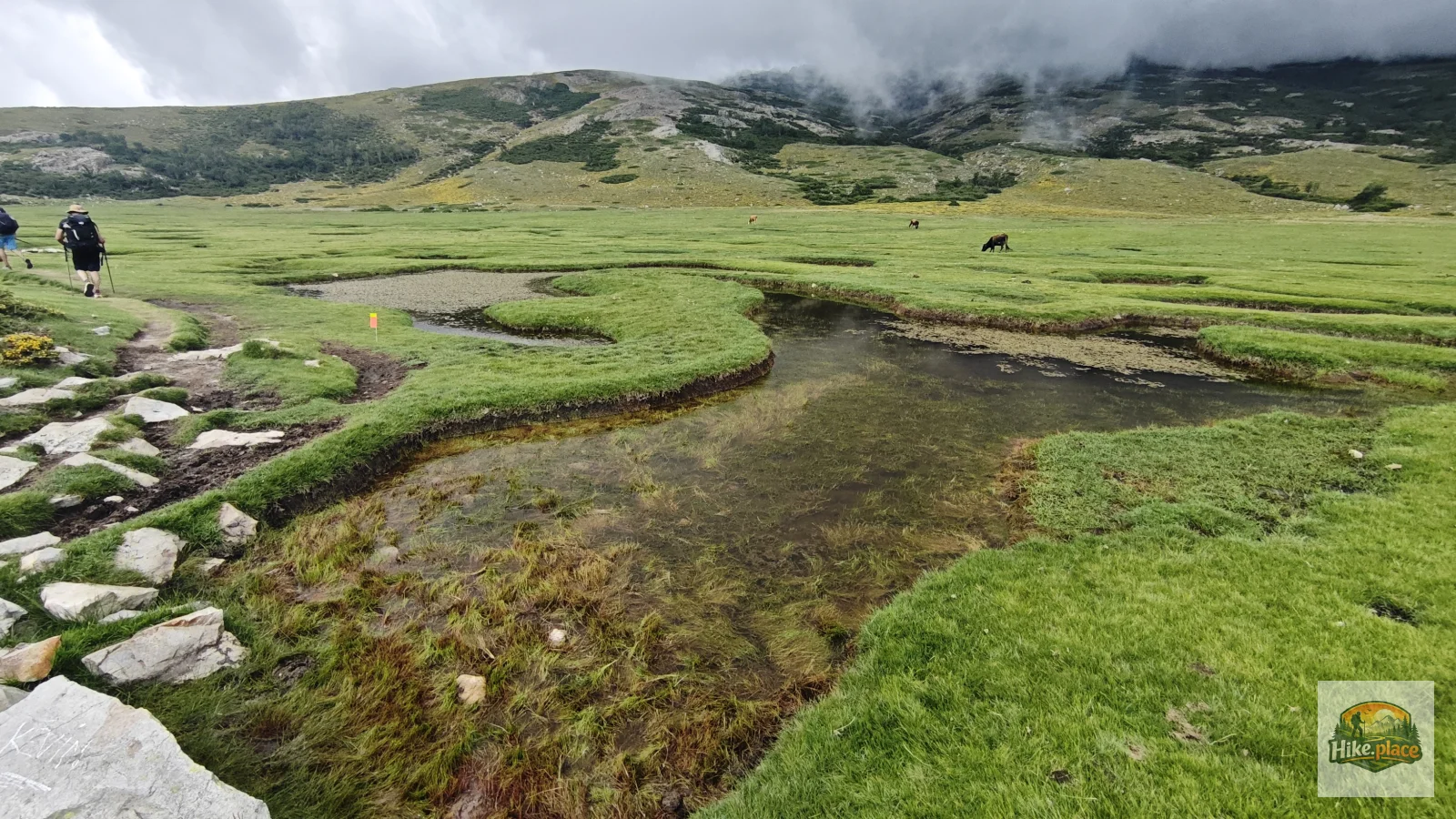
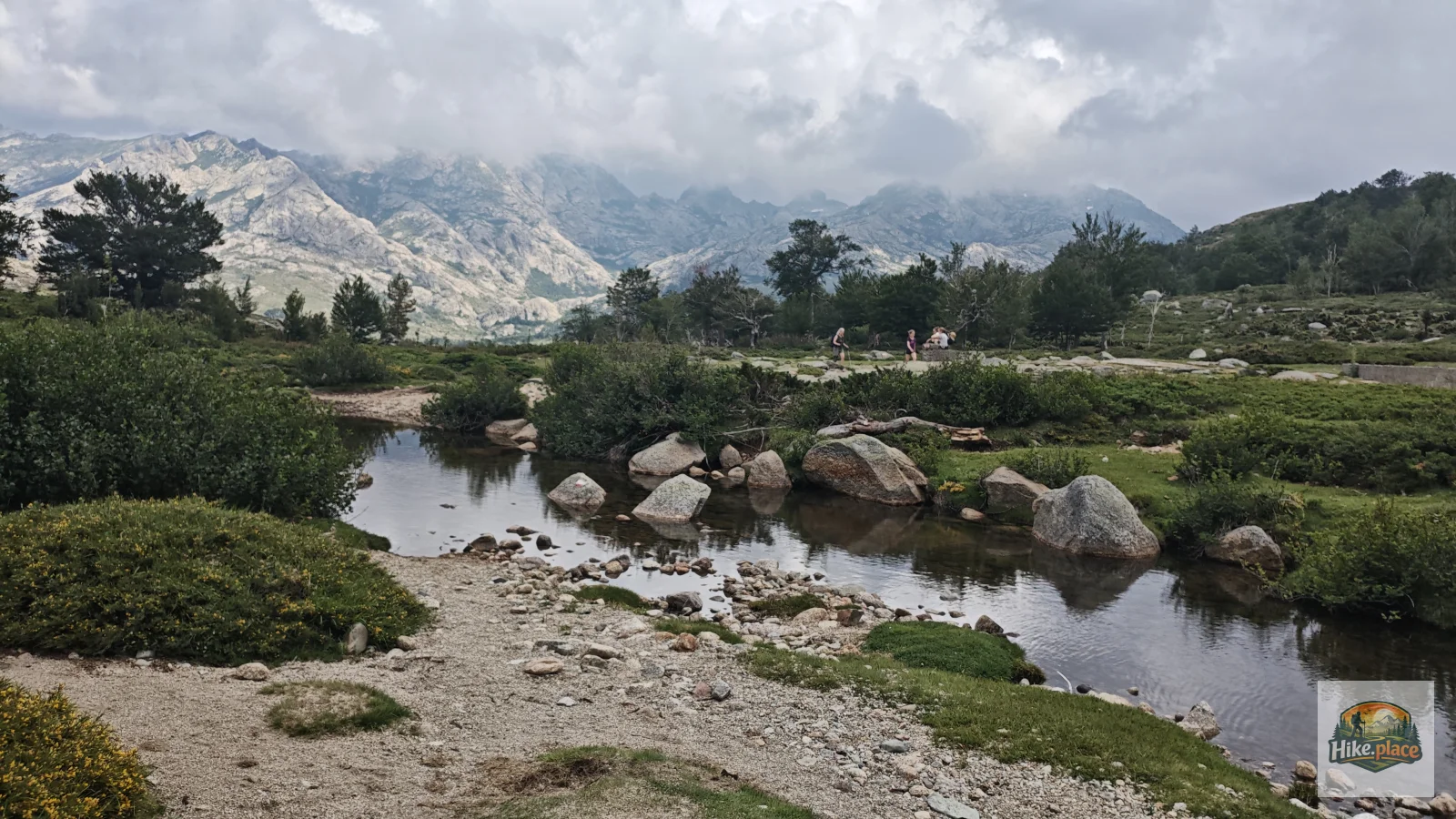
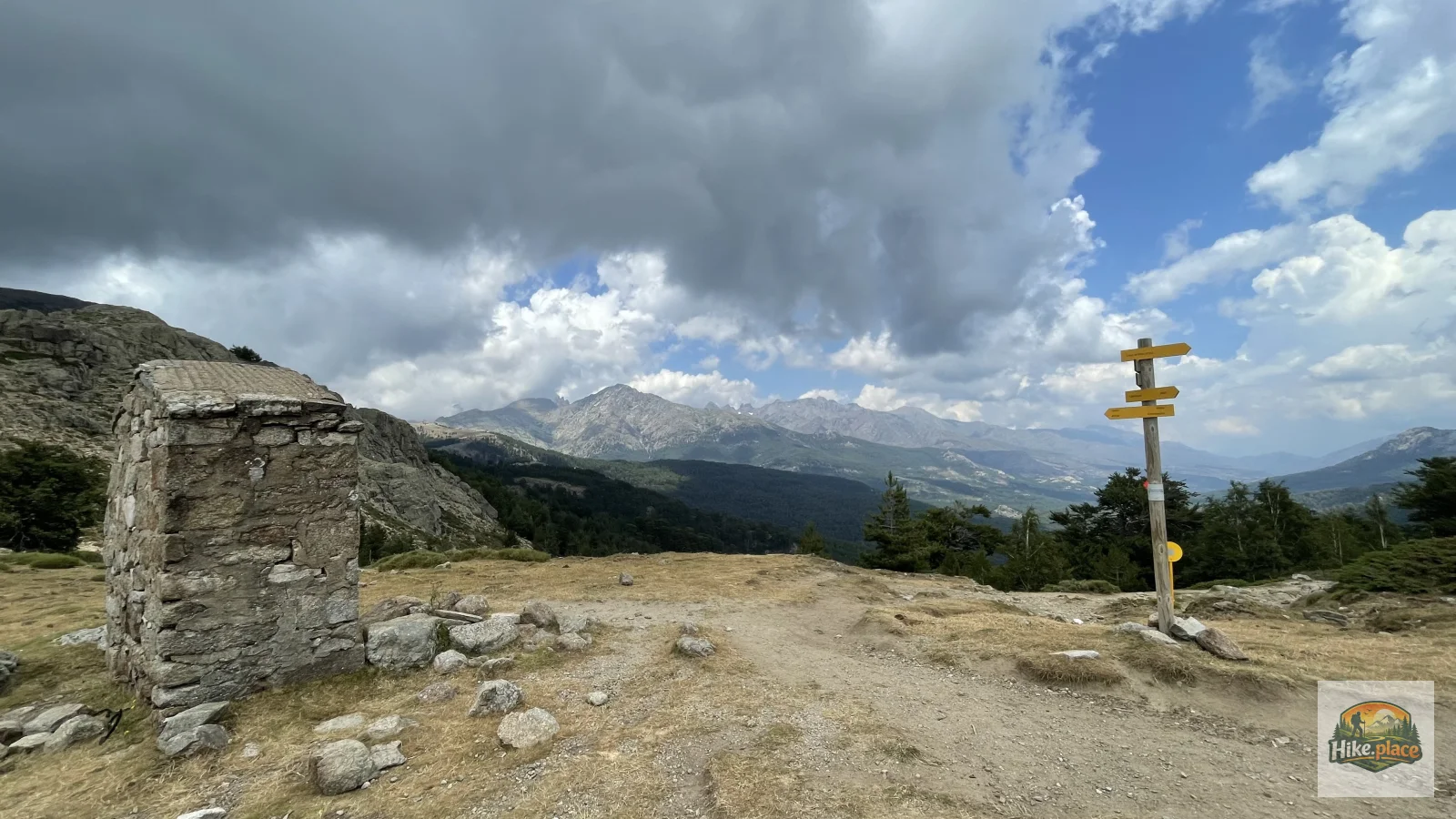
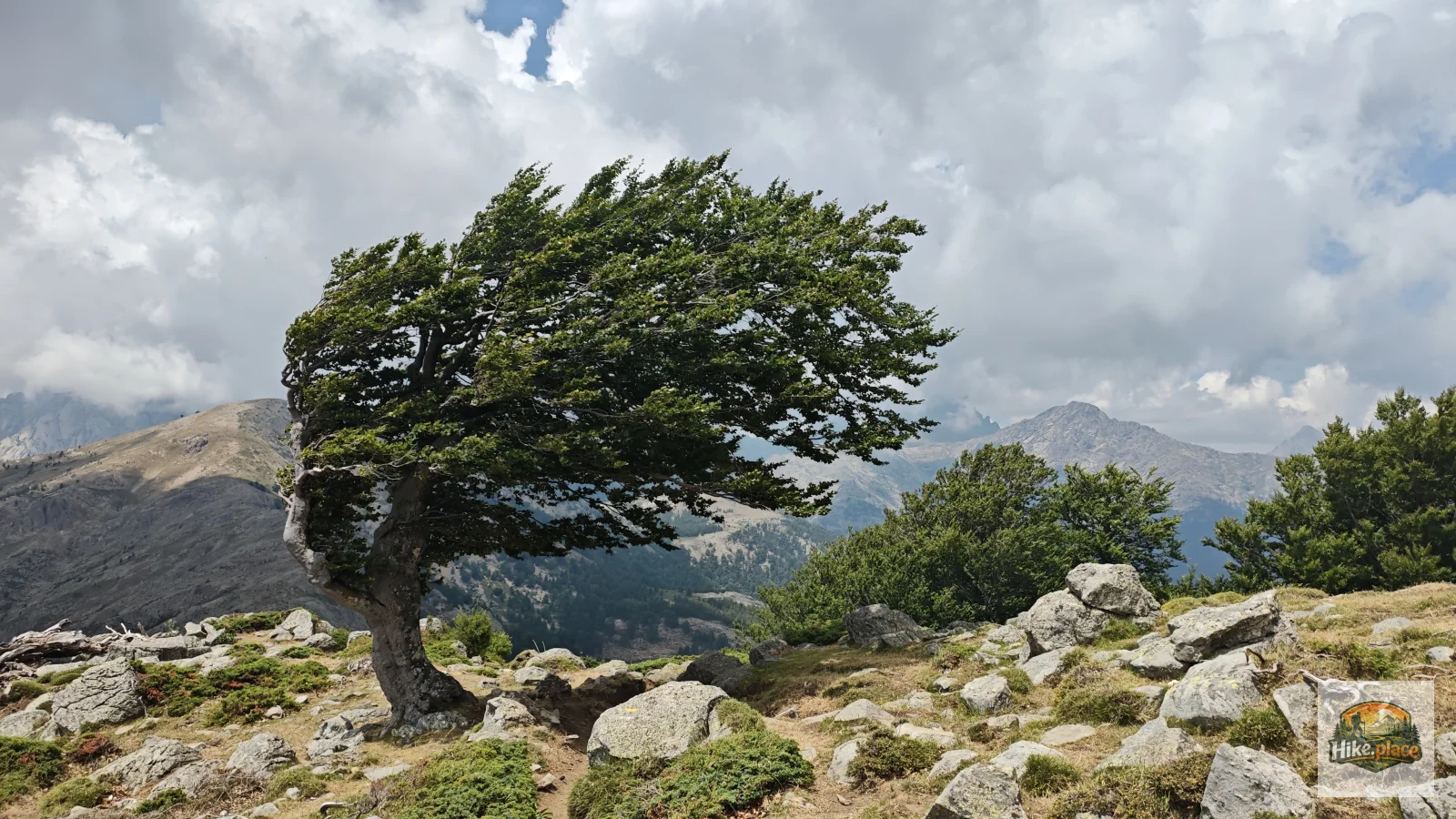
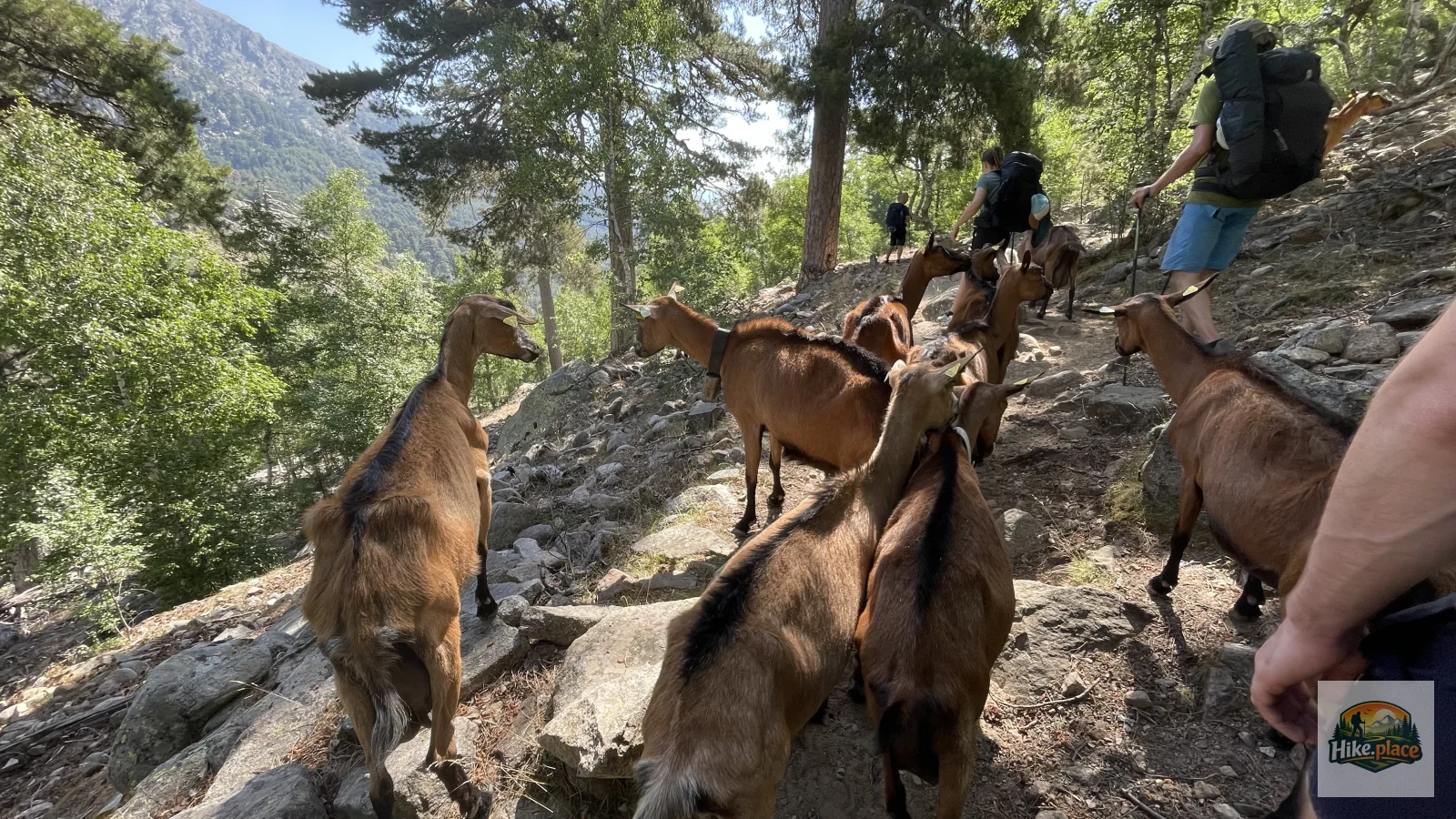
On the way out we watched the huts being resupplied by donkey, and moments later a herd of goats blocked the trail. We crossed a zone where the wind blows so hard even the trees can't grow straight — they stream sideways like wind-blown hair. Then came one of the strangest stretches of the trek: Lac de Nino, at 1,743 metres, ringed by the so-called pozzines — spongy grass lawns where the ground bounces under every step and half-wild horses graze freely. That's exactly where we met our first ones, storm clouds already gathering behind them again. Only the swimming spot we'd been dreaming about turned out to be not quite a swimming spot.
We ended the day with a local shepherd at one of the bergeries above the plateau. Shepherd huts here have always doubled as the simplest lodging for trekkers. Nothing much to look at, and the wind was picking up — but his salami and cheese were superb (Corsican ewe's cheese and charcuterie are legendary, after all), and the beautiful wooden, and above all warm, shower was a lovely surprise. The comic finale of the evening: the dynamically changing price of wine.

Day 6: Brèche de Capitello and Rain-Greased Granite
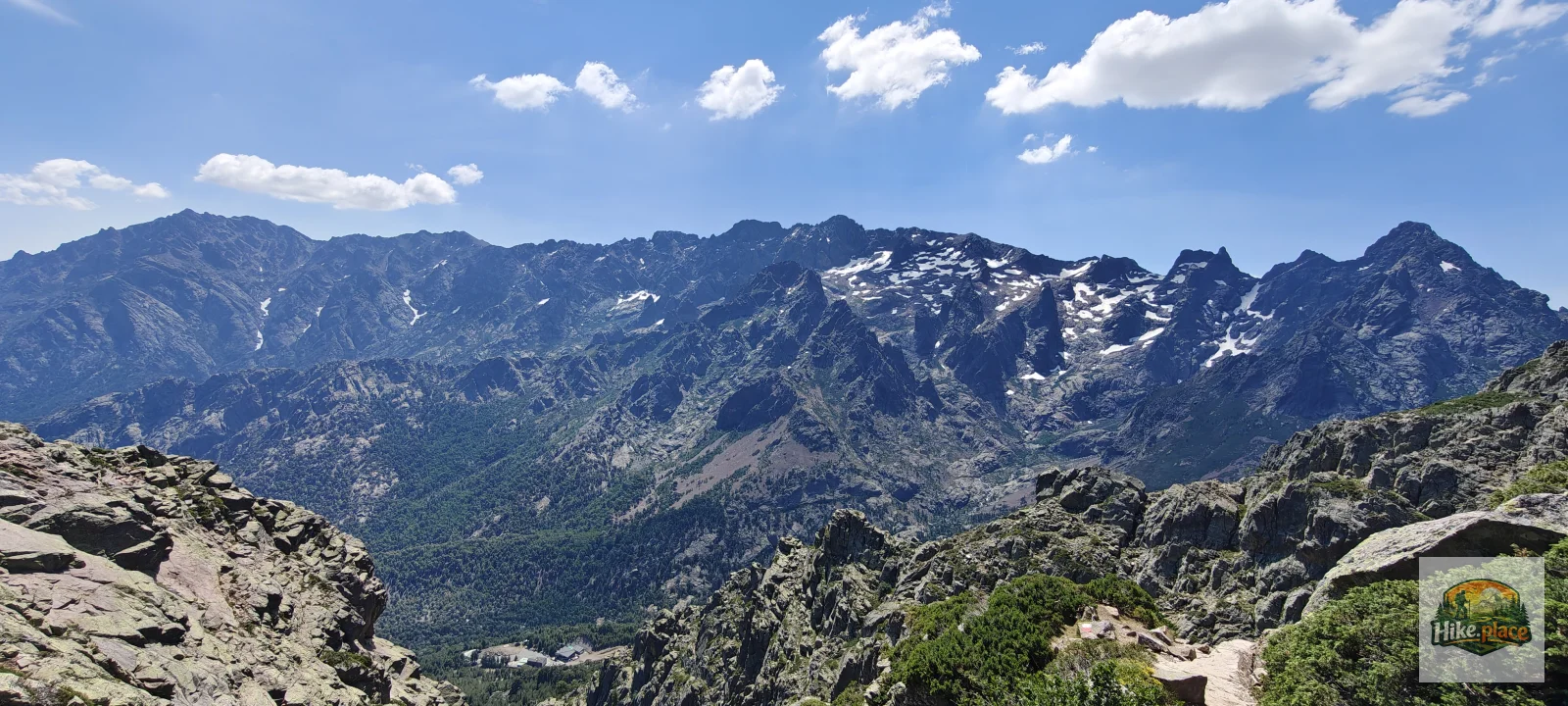
Two kilometres in we reached the Manganu hut with dreams of coffee. It didn't open until nine. The trek toughened up: scree on the way up, more snowfields, and finally the rock notch of the Brèche de Capitello at 2,225 metres — one of the most photogenic spots on the whole route. Below us opened the glacial lakes Melu and Capitellu, high above the Restonica valley. The ridge traverse that followed served up technical passages with chains and, in places, what you could honestly call easy climbing.
We came off the ridge to the Petra Piana hut at the exact moment it started to rain. Lunch was fine; the coffee genuinely horrible. Meanwhile the rain got heavier, so after a few minutes of denial we surrendered and pulled on ponchos and shells. Wet granite is slippery — but that just makes you faster. With soaked boots (and, for some of us, shorts) we descended into the valley, changed into dry clothes, went for a swim anyway, and climbed up to the l'Onda hut for the night.
Day 7: Vizzavona — Halfway, and Steaks at a Five-Star Hotel
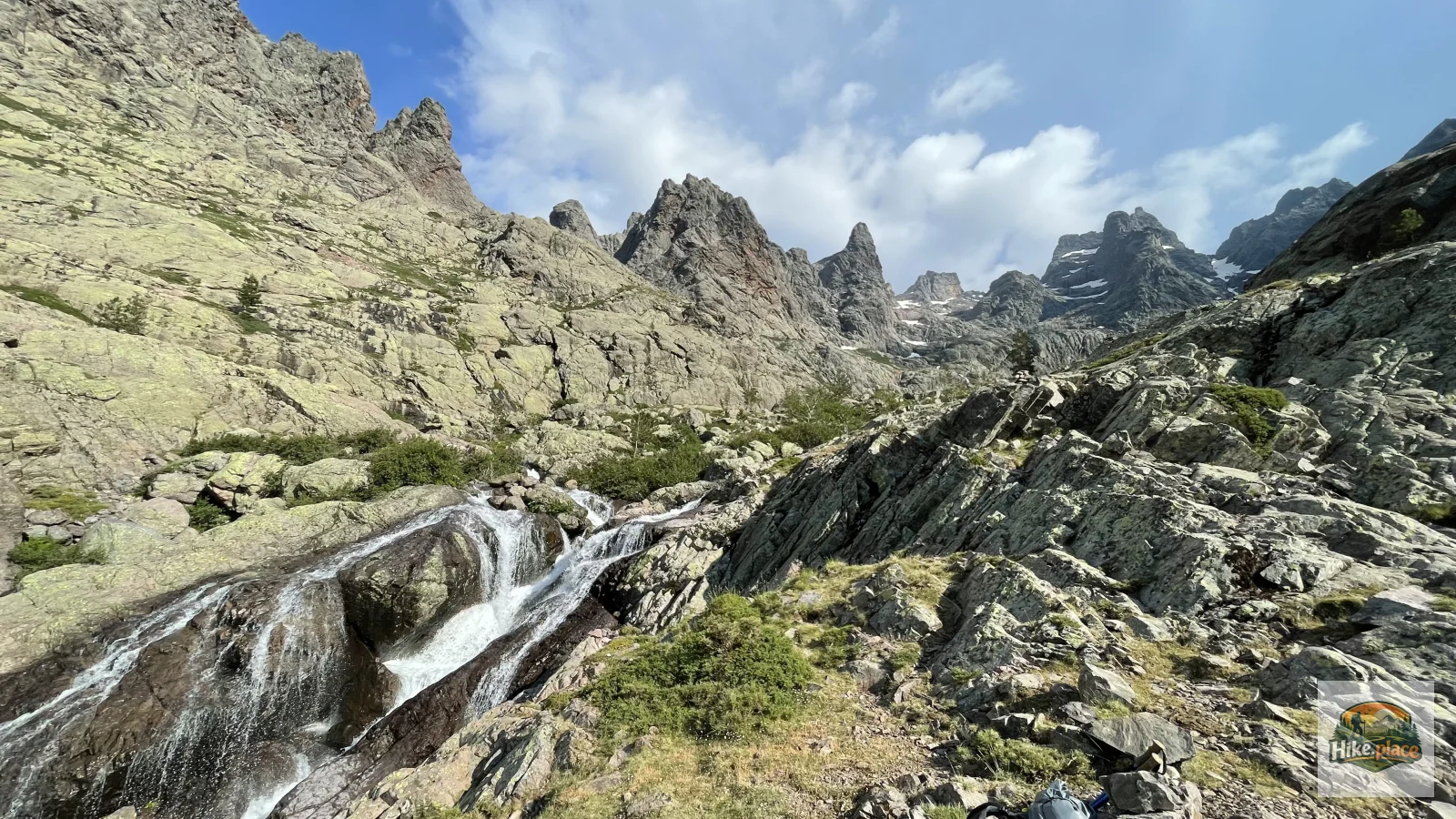
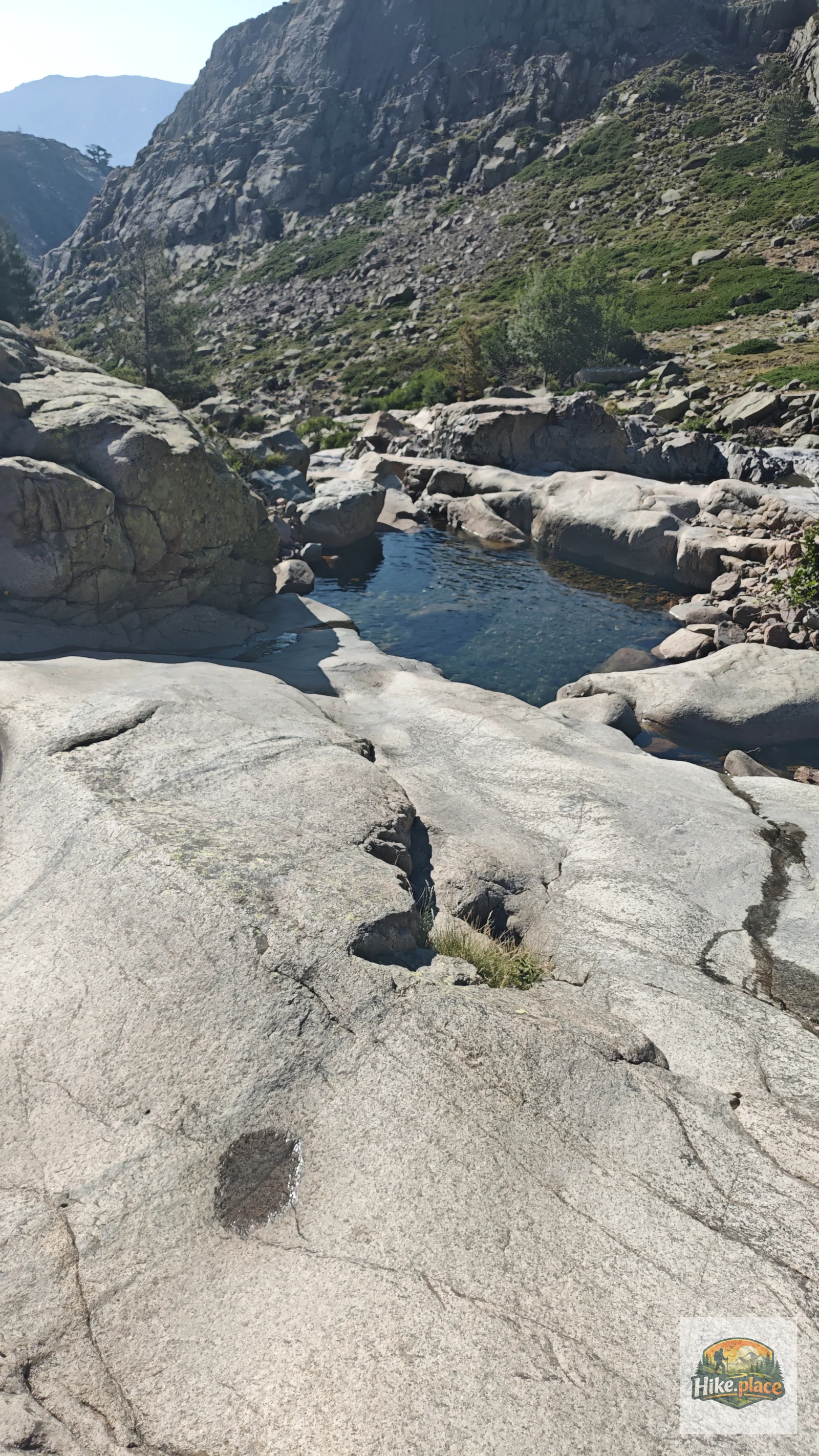
A strong wind leaned into us on the climb from the hut, but the gentle grade and the views back into the big mountains — visibly getting rained on — more than made up for it. Beyond the next top the landscape opened into waterfalls and pools: the descent to Vizzavona runs past the Cascades des Anglais, the "English waterfalls" beloved by British tourists back in the Belle Époque. We cooled off in the prettiest pool of the lot.
Vizzavona, where we came down, is the official halfway point of the GR20 and the only place where the trek crosses a road and the Ajaccio–Bastia railway. You can honourably finish here — or start. We restocked, and had a stroke of luck in bad luck: the snack bar we'd counted on wasn't cooking that day, but right next door stood a five-star hotel with an excellent restaurant. The northern half thus ended in style, with outstanding steaks. In the afternoon we stepped into the southern half. It has a reputation as the easier one — lower, grassier, faster — though "easier" is a very relative term on the GR20. At first it genuinely played the part. The bad news: neither of the two bergeries we'd picked for the night was still in business. Utterly spent, we camped at the second one anyway. A mountain stream saved us, doubling as the evening bath.
Day 8: Fallen Giants and the Best Breakfast of the Trek
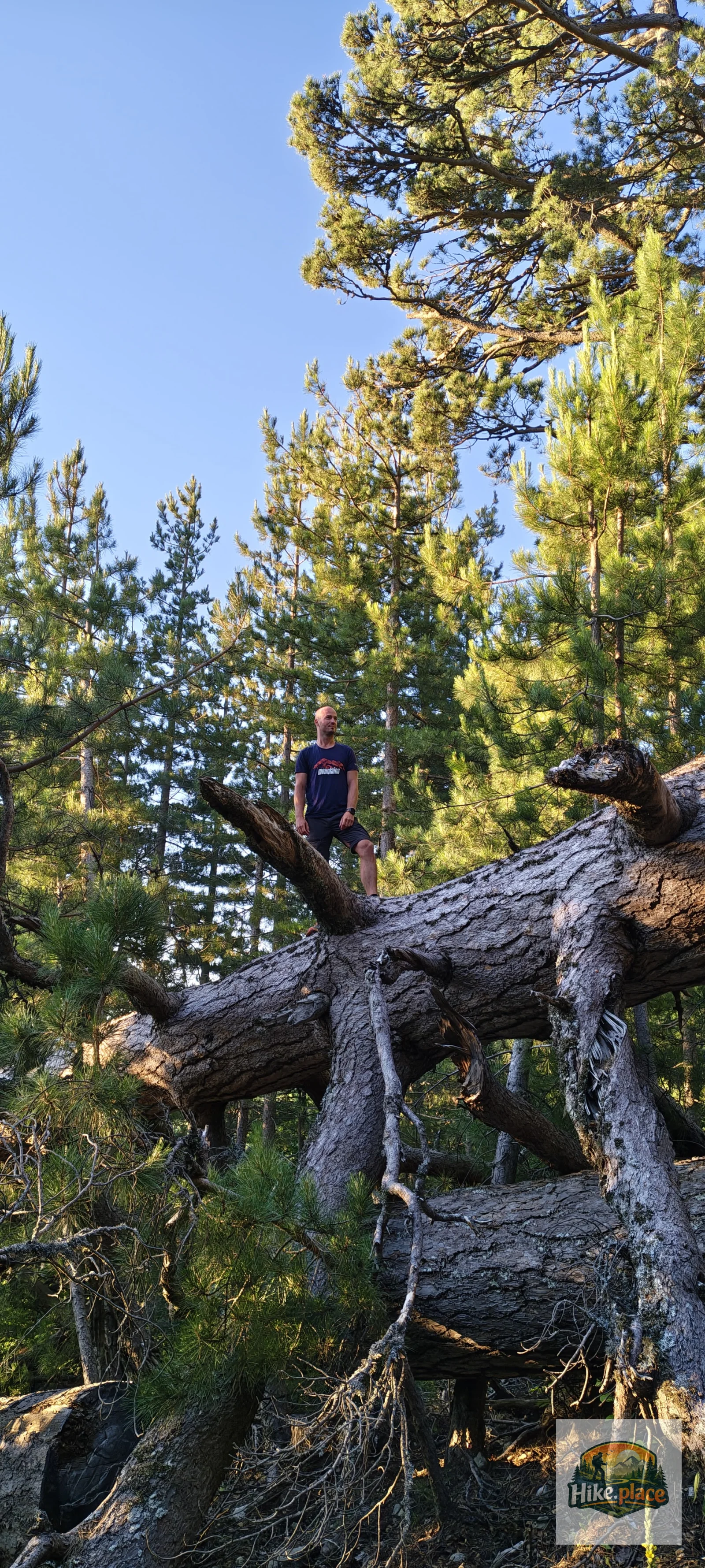
We set off early and were soon weaving between giant fallen pines that reminded us of American sequoias. Laricio pines live for centuries and rank among the biggest trees in the whole Mediterranean — the photo stop was mandatory. Then came the small ski station of E Capannelle and, in it, the best breakfast of the trek: open from seven, huge choice, morale at maximum.
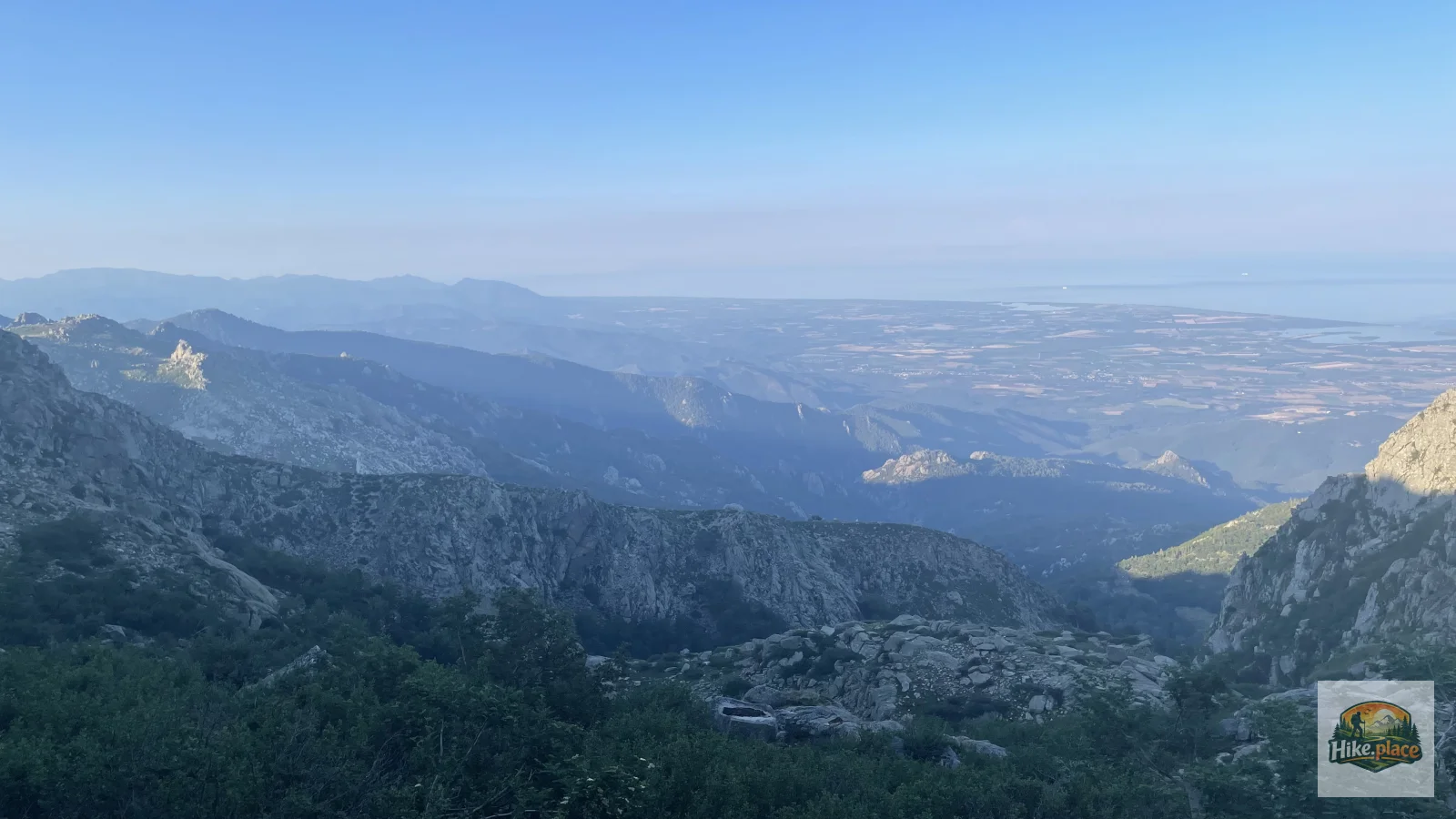
Just above the hut we had to dodge a herd of cows marching down the path straight at us. Around midday we reached a river and took a refreshing swim, then wandered through a forest of enormous pines, hugging them partly as a joke and partly to recharge. A final gentle 450-metre climb, at times in strong wind, brought us to a sleeping spot with beautiful views of the sea. The southern GR20 hugs the coast more closely, so from here on the Tyrrhenian Sea is in sight almost constantly. We did move the tent after pitching it once, though — the smell of horse urine insisted.
Day 9: The Coscione Plateau, Narnia and Warm Water at Last
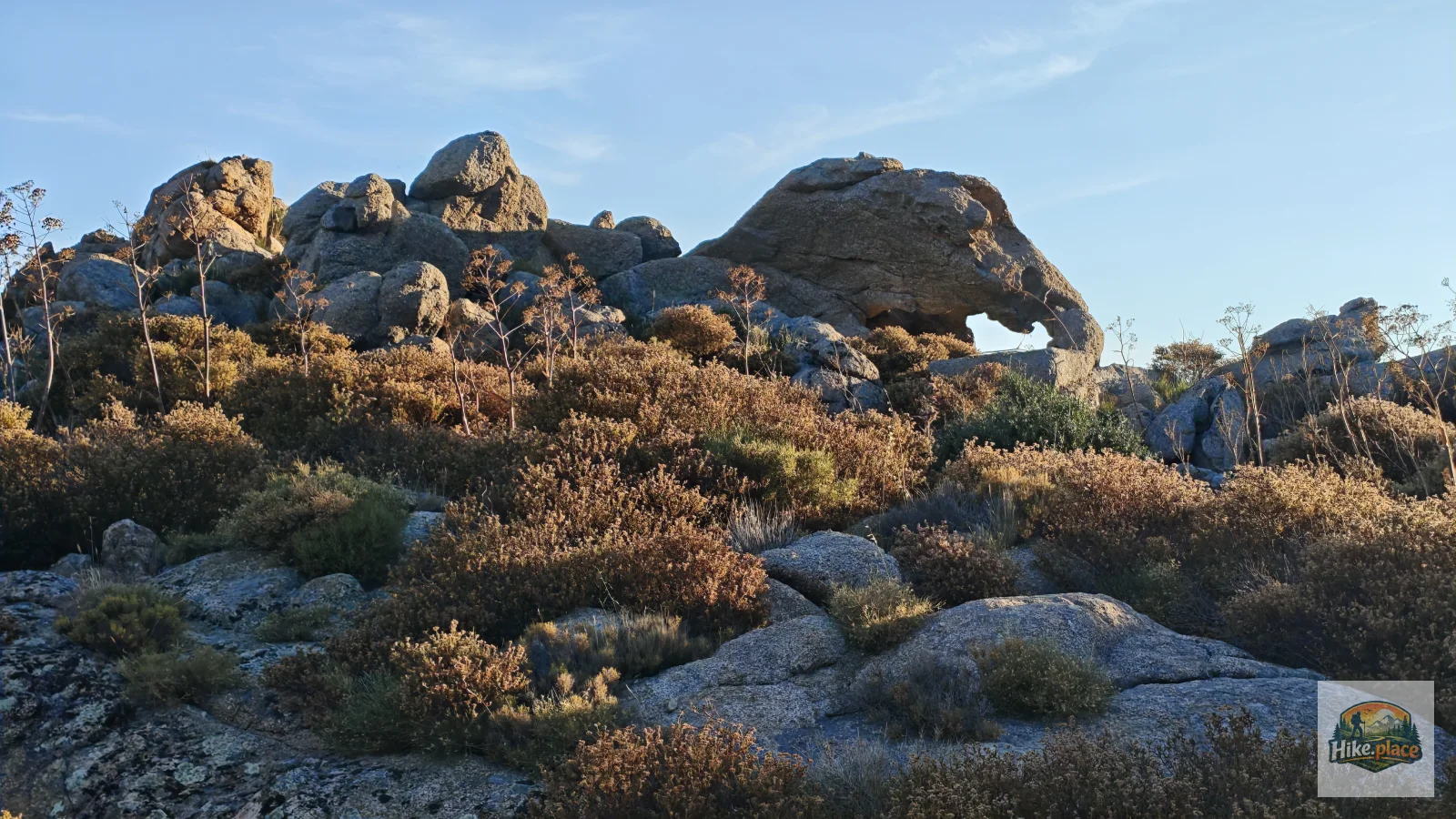
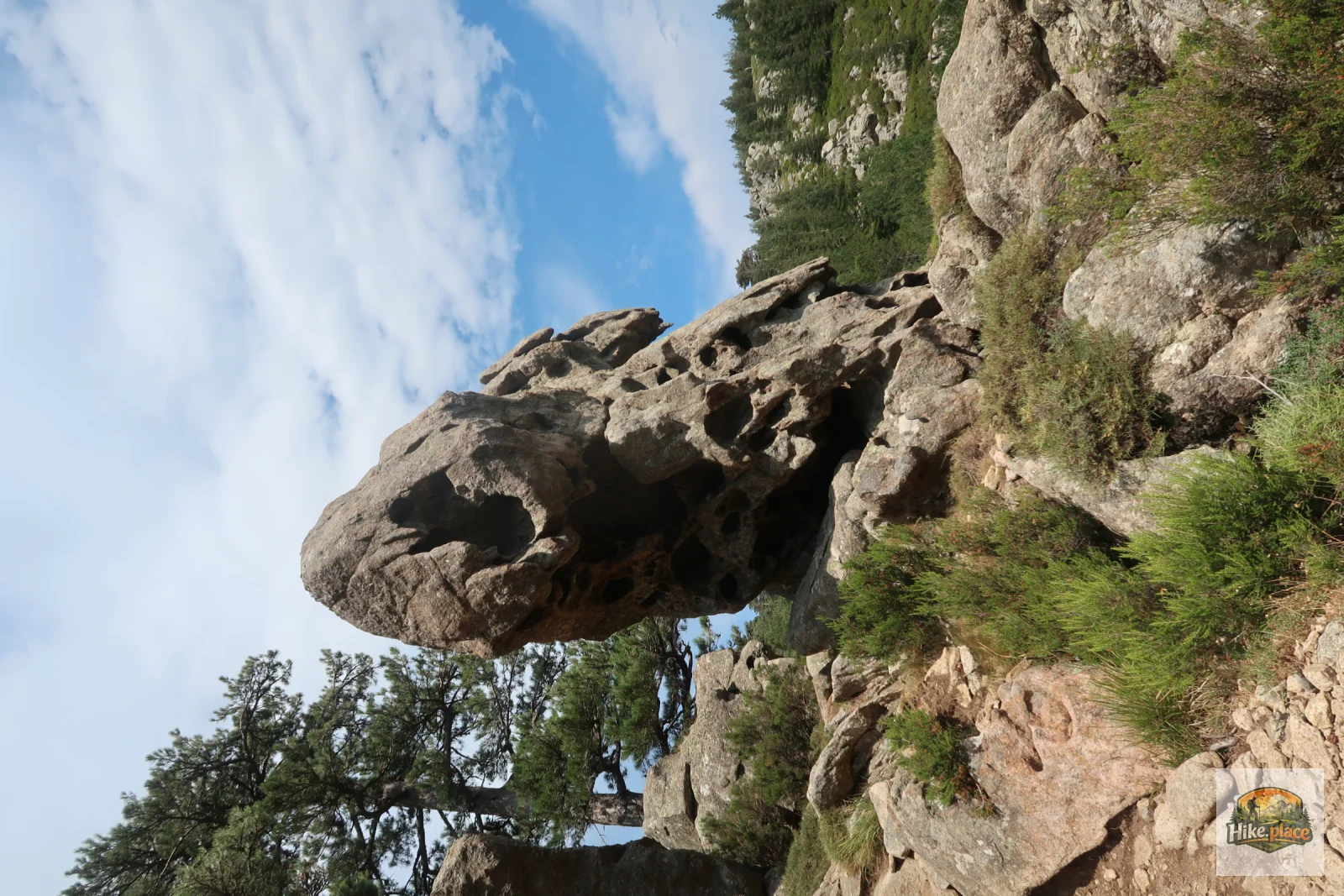
In the morning we passed rock formations that looked airlifted straight from home. At the bergerie below them, a young woman was shoeing a horse that had just carried up supplies — and we thought of the earlier trailside repair of Honza's boot. Then the landscape transformed completely: we had entered the Coscione, the highest plateau in Corsica, which the GR20 crosses past the Matalza bergeries. Green meadows, meandering streams, pozzines, free-ranging horses and pigs. Narnia, basically.
And those lazy streams on the sun-baked plateau hold one extra piece of magic: just before our overnight spot we found a beautiful swimming hole where, for the first time on the whole trek, the water surprised us by being warm. Freshly rinsed, we arrived at the bergerie for the night, where locals played guitar and sang through the evening. Some of us treated ourselves to a three-course dinner, aperitif included. We finished the wine and went to sleep happy.
Day 10: Monte Incudine, Bulls on the Trail, and Sacred Bavella
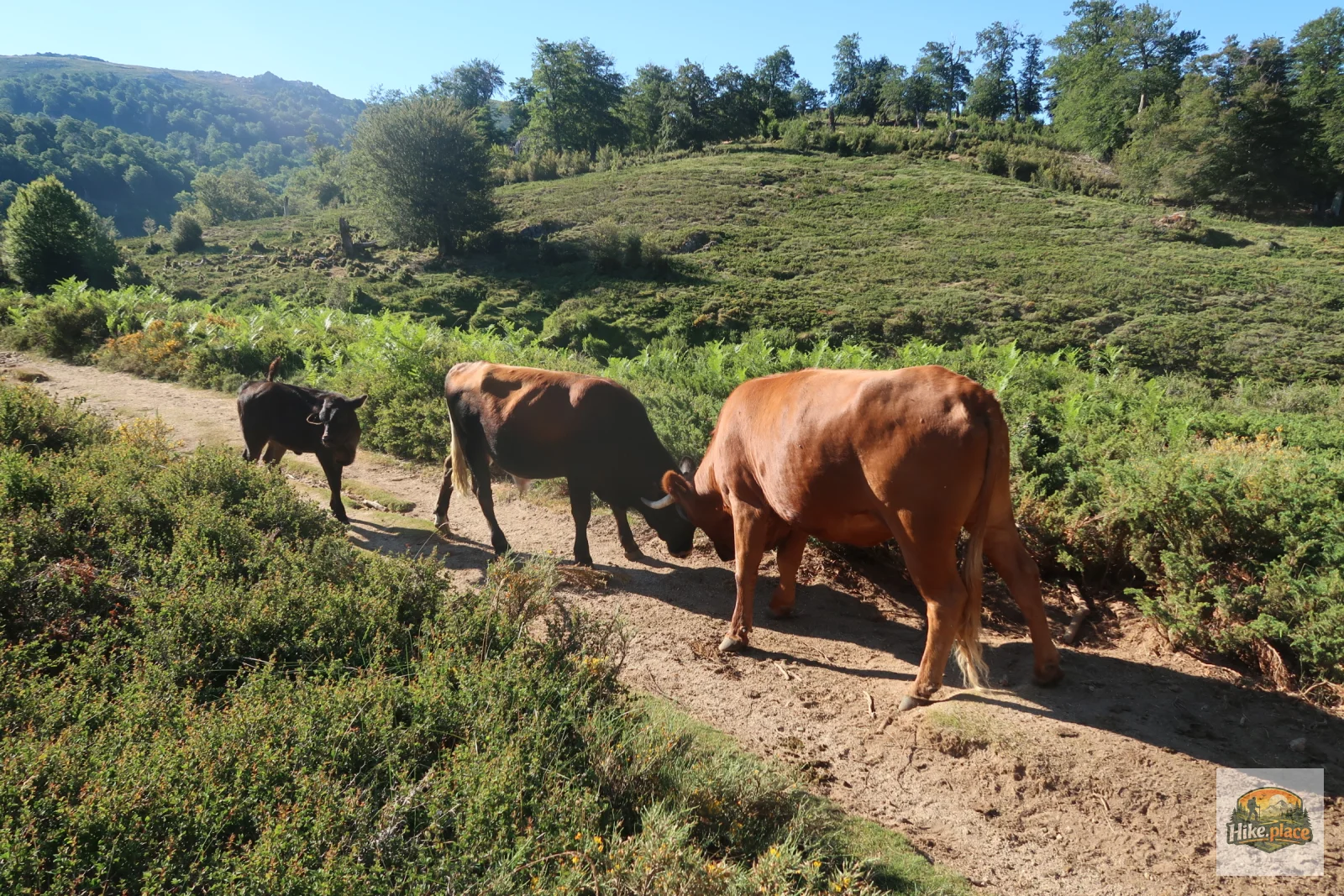
Free-ranging pigs spiced up the morning climb, followed by cows and bulls. Two of them got into a fight right on the trail and blocked it completely, forcing two of the team into a detour through the bushes. A bergerie supplied a snack and pudding, and pasture country carried us up Monte Incudine — at 2,134 metres the highest mountain of southern Corsica and the last two-thousander of the trek. From there, only the long descent to the sea remained.
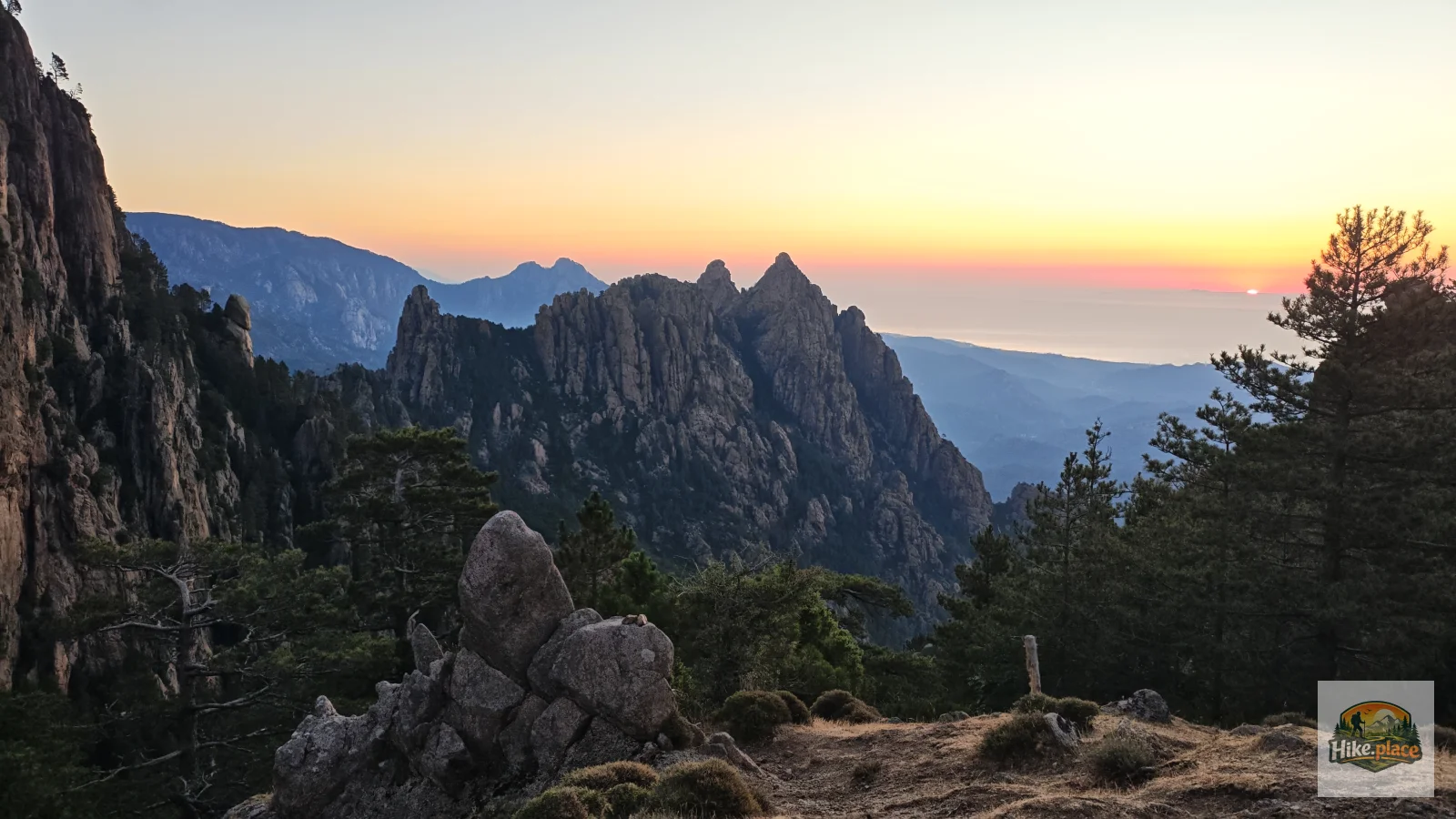
A thunderstorm chased us off the col and we escaped it by a whisker — only to face an unpleasant climb in brutal heat up to the Bavella pass at 1,218 metres. Above it rise the Aiguilles de Bavella, seven granite towers between 1,588 and 1,848 metres that make Bavella one of the most important climbing areas on the island. It's a sacred place too: by the road stands the statue of Notre-Dame des Neiges, Our Lady of the Snows, protector of the pass. Corsica was dedicated to the Virgin Mary back in the 18th century, and the island's anthem belongs to her to this day. We ate, briefly considered staying, and in the end carried on to Paliri — the very last hut of the GR20, perched in a gorgeous spot with views of both the sea and the rock towers. Last night on the trail: a bottle of wine, a long replay of everything we'd lived through, and sleep.
Day 11: Through the Stone Gate to Conca
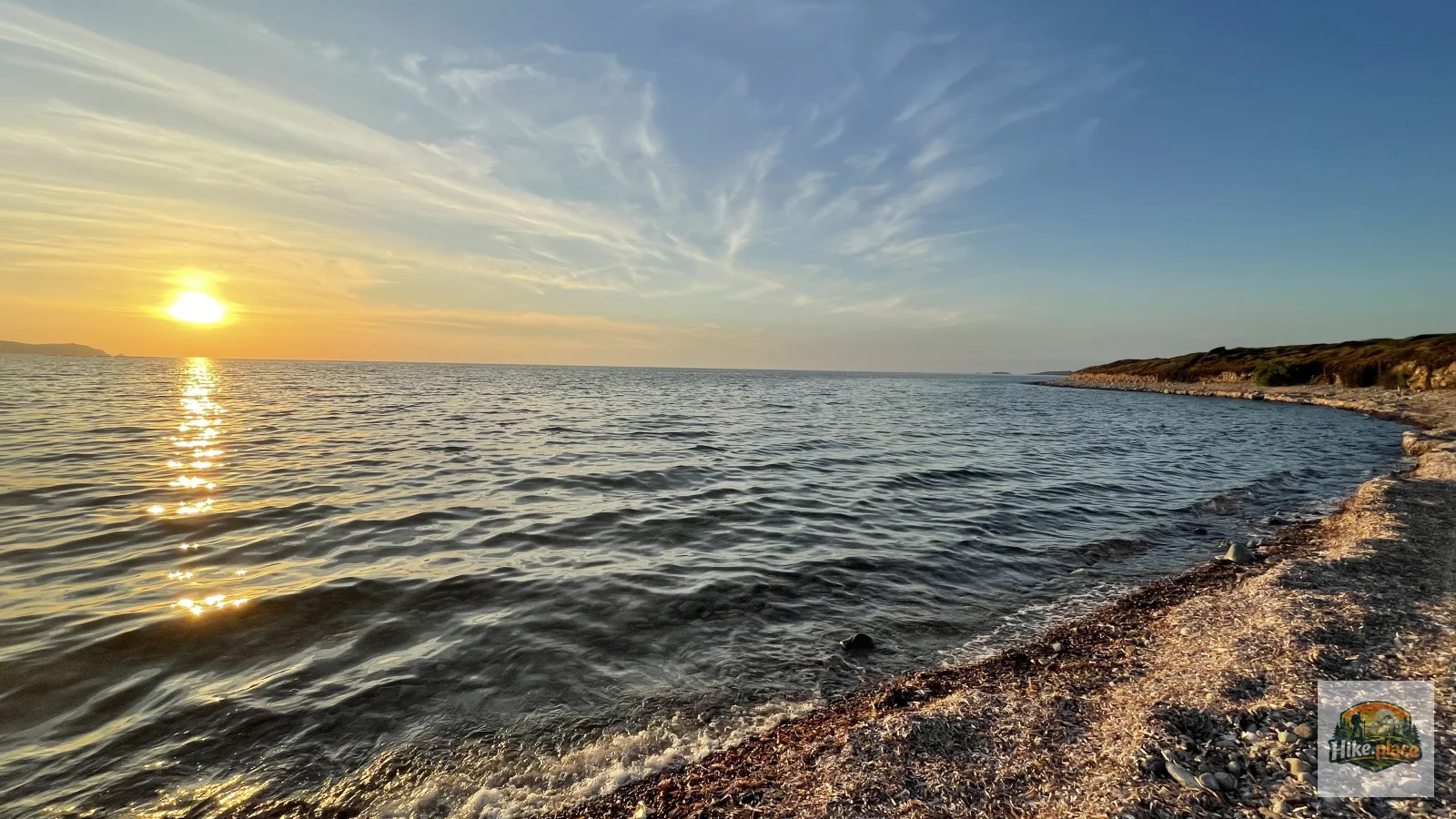
We slept in a little, then set out in terrible heat for the final stage, aiming to finish around noon. Half a day of gentle traverses under a scorching sun with almost no shade — down here the granite gradually gives way to sandy paths and fragrant maquis — and with every kilometre the anticipation grew. Just before the end, the trail squeezes through the Bocca d'Usciolu, a narrow slot carved through the rock at 587 metres and nicknamed "the gateway of the GR20". You step through the stone gate and see Conca for the first time, with the bay of Porto-Vecchio in the distance. More importantly, beyond the gate there was finally shade. We ran the last stretch down and finished exactly where every proper trek should finish: at the pub at the end of the trail. Lunch, one last look back at the mountains, and a bus to a campsite by the sea, where we spent the remaining days before flying home.
Comments
No comments yet.
Sign in to like and comment.